
Embroidery puckering is one of the most common problems that can affect the appearance of an embroidered design. It happens when the fabric becomes gathered, wrinkled, or distorted around stitched areas. Professional Embroidery Digitizing Services help prevent this problem by creating stitch patterns that match the fabric, design, thread, and embroidery machine. Proper digitizing controls stitch density, direction, pull compensation, underlay, and other technical details before the design reaches the machine.
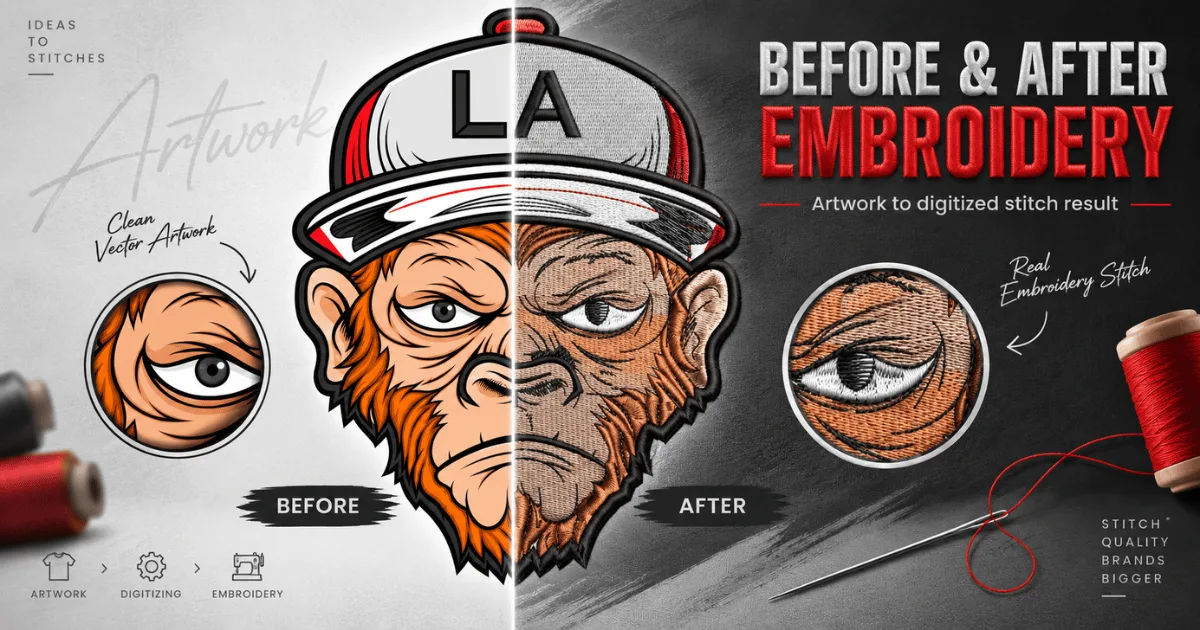
Puckering is not always caused by poor-quality fabric or an embroidery machine. In many cases, the main problem starts with the digital embroidery file. If the file contains too many stitches, incorrect stitch angles, or unsuitable underlay, the fabric can become stressed during stitching.
Understanding how professional digitizing reduces these problems can help businesses, clothing brands, embroidery shops, and individual customers achieve cleaner and more consistent results.
What Is Embroidery Puckering?
Puckering occurs when embroidered fabric develops small wrinkles, waves, or gathered areas around the design. Instead of remaining flat and smooth, the material pulls toward the stitched area.
The problem can be easy to notice on lightweight fabrics, shirts, jackets, caps, and other garments. Large designs and areas with heavy stitching are especially likely to create tension.
Embroidery involves repeatedly pushing a needle and thread through fabric. Every stitch creates a small amount of tension. When hundreds or thousands of stitches are placed too closely together, that tension can accumulate.
A properly digitized design distributes the stitching more effectively. This allows the fabric to handle the embroidery without excessive distortion.
Why Does Puckering Happen?
Several factors can contribute to puckering. Understanding them makes it easier to see why digitizing is so important.
Excessive Stitch Density
Stitch density refers to how closely stitches are placed together. A design with unnecessarily high density can put too much stress on the fabric.
When many stitches occupy a small area, the thread pulls against the material. Lightweight fabrics may not have enough structure to resist this force.
Professional digitizing reduces unnecessary stitches while keeping the design visually complete. This creates a better balance between coverage and fabric stability.
Incorrect Stitch Direction
Stitch direction also affects how fabric reacts to embroidery. If every section of a design pulls in the same direction, the tension may become concentrated.
Professional digitizers change stitch angles between different design elements. This distributes the pulling force and helps the finished embroidery maintain a flatter appearance.
Insufficient Underlay
Underlay consists of foundational stitches placed beneath the visible embroidery. These stitches help stabilize the fabric before the main design is sewn.
Without suitable underlay, the fabric can move or stretch while the machine creates the top layer. This can lead to distortion and puckering.
The right underlay depends on the fabric and design. A dense logo on a stretchy T-shirt may require a different approach from a small design on a structured jacket.
How Do Embroidery Digitizing Services Control Stitch Density?
One of the most important ways Embroidery Digitizing Services prevent puckering is by carefully controlling stitch density.
A professional digitizer does not simply convert an image into as many stitches as possible. Instead, the design is analyzed to determine how much stitching is actually necessary.
Dense areas may be reduced or redesigned to avoid excessive thread buildup. Open areas can often use fewer stitches without affecting the visual quality of the design.
Matching Density to Fabric
Different fabrics react differently to embroidery. Denim, canvas, cotton, polyester, fleece, and performance materials each have different levels of stability.
A dense stitch pattern that works well on a firm fabric may cause problems on a thin or stretchy material.
Professional digitizing takes the fabric into account when determining stitch density. This helps prevent excessive tension and allows the embroidery to sit naturally on the garment.
Avoiding Unnecessary Stitches
High-quality digitizing also eliminates redundant stitching. Unnecessary stitches increase production time, thread consumption, and fabric stress.
Removing these stitches can make a design more efficient without sacrificing its appearance.
The result is embroidery that looks cleaner while putting less mechanical pressure on the garment.
How Underlay Prevents Fabric Movement
Underlay is another major part of professional digitizing. It acts as a foundation for the visible stitches.
Before the machine creates the main elements of the design, underlay can help anchor the fabric and provide support. This is especially important when working with materials that stretch or move easily.
Types of Underlay
Different underlay techniques serve different purposes. Some designs may benefit from edge-walk underlay, while others may require zigzag or center-run structures.
The choice depends on the shape, size, density, and fabric involved.
Professional Embroidery Digitizing Services select underlay according to the specific requirements of the design instead of applying the same settings to every project.
Supporting Stretchy Fabrics
Stretch fabrics are particularly vulnerable to puckering because they can move while being stitched.
A suitable underlay helps stabilize the embroidery area and reduces unwanted movement. However, stabilization should be balanced carefully because excessive support can also make the finished garment stiff.
The goal is to create enough structure for clean stitching without changing the natural feel of the fabric.
The Importance of Pull Compensation
Pull compensation is a technical adjustment used in embroidery digitizing to account for the natural movement of fabric and thread during stitching.
When a design is embroidered, certain stitch areas can pull inward. This may cause gaps or distort the intended shape.
Digitizers compensate for this movement by slightly adjusting the dimensions of selected design elements.
Maintaining Accurate Shapes
Without appropriate pull compensation, letters, borders, and other shapes may appear narrower than intended.
For example, a circular logo might become slightly compressed after stitching. Proper compensation helps the finished embroidery maintain the intended appearance.
It also reduces the possibility of gaps between adjacent elements.
Balancing Compensation
Too little compensation can result in distortion and gaps, while excessive compensation can make elements appear too large or crowded.
Experienced digitizers therefore consider the fabric, stitch type, design size, and machine behavior before applying adjustments.
How Stitch Direction Reduces Tension
Stitch direction is an important design decision that influences how embroidery interacts with fabric.
When stitches are arranged in different directions, the forces created during stitching can be distributed more effectively.
For example, one section may use a diagonal angle while another uses a different angle. This creates a more balanced structure rather than allowing tension to build along one axis.
Professional digitizing also uses stitch direction to improve visual texture. Satin stitches, fill stitches, and other stitch types can be positioned strategically to produce both attractive and stable embroidery.
Choosing the Right Stitch Types
Not every part of a design should be digitized using the same stitch type.
Satin stitches are commonly used for borders, lettering, and narrow shapes. Fill stitches are generally better suited to larger areas. Running stitches can be useful for outlines and fine details.
Choosing the correct stitch type can reduce unnecessary density and improve fabric behavior.
Satin Stitch Management
Long satin stitches can create significant pulling force, particularly when they are used over large areas.
Professional digitizers control satin stitch width and direction to avoid creating unstable structures.
When a satin area becomes too wide, it may need to be divided or redesigned using an appropriate fill technique.
Fill Stitch Management
Fill stitches cover larger areas, so their density and direction require careful planning.
A properly designed fill avoids excessive thread accumulation while still providing adequate coverage.
This helps maintain a smooth surface and reduces the risk of fabric distortion.
Proper Stabilization Works With Good Digitizing
Although digitizing plays a major role, stabilization is equally important during production.
A well-digitized file can still produce puckering if the wrong stabilizer is used or the fabric is improperly secured.
Stabilizers provide additional support while the machine operates. The correct choice depends on fabric type, garment construction, design size, and embroidery method.
Matching Stabilizer to the Material
Stable fabrics may require relatively simple stabilization, while thin or stretchy materials generally need additional support.
Professional embroiderers consider both the digitized design and the physical characteristics of the garment.
This combination helps prevent movement during stitching.
Avoiding Excessive Hooping Pressure
Hooping holds the material in position, but excessive pressure can damage some fabrics or create temporary distortion.
The fabric should be secure without being stretched unnaturally.
Good production practices therefore complement the work performed during digitizing.
How Design Size Affects Puckering
The size of an embroidered design can significantly affect fabric stability.
Large designs naturally contain more stitches and cover a greater portion of the garment. If they are not planned carefully, they can create considerable tension.
Small designs may require different stitch settings because tiny details can become too dense when reduced.
Professional Embroidery Digitizing Services adjust stitch structures according to the final production size rather than treating every design as a simple scaled image.
Testing Helps Identify Puckering Problems
Professional digitizing is often followed by testing. A design may look perfect on a computer screen but behave differently when stitched.
A sample stitch-out allows the digitizer or embroiderer to examine the actual result.
They can identify problems such as excessive density, fabric movement, thread buildup, gaps, incorrect compensation, or unsuitable stitch directions.
Making Adjustments After Testing
If puckering appears during testing, the digitized file can be modified.
Density can be reduced, underlay can be changed, stitch angles can be adjusted, or compensation can be refined.
This process is valuable because embroidery is a physical process. Digital artwork alone cannot always predict how every fabric will respond.
Why Professional Digitizing Matters
Automatic image-to-embroidery conversion may produce a basic stitch file, but it does not always understand the physical requirements of embroidery.
Professional Embroidery Digitizing Services involve decisions made specifically for thread, fabric, machine settings, design dimensions, and production requirements.
An experienced digitizer can identify areas likely to cause problems and modify them before production.
This can reduce failed samples, wasted garments, excessive thread use, and inconsistent embroidery.
Common Mistakes That Increase Puckering
Several mistakes can make puckering more likely.
One common mistake is using an embroidery file designed for a different fabric. A design created for denim may not perform correctly on a lightweight T-shirt.
Another mistake is excessive stitch density. More stitches do not automatically mean better embroidery.
Poor stabilization is another frequent issue. Even an excellent file can produce disappointing results when the garment is not properly supported.
Incorrect machine tension, unsuitable needles, damaged fabric, and improper hooping can also contribute to the problem.
How Businesses Can Reduce Embroidery Problems
Businesses ordering embroidered uniforms, promotional products, branded apparel, or merchandise should provide useful production information before digitizing begins.
The digitizer should know the garment type, fabric, final design dimensions, embroidery location, and preferred thread characteristics.
Providing this information helps the digitizer create a file specifically for the intended application.
It is also useful to request a sample before producing a large order. Testing can reveal issues early and prevent expensive mistakes.
A Practical Approach to Pucker-Free Embroidery
Achieving smooth embroidery requires coordination between design preparation and machine production.
Start with clean artwork and determine the exact final embroidery size. Then select stitch types based on the shapes and details in the design.
Next, choose appropriate density, underlay, stitch direction, and pull compensation. These settings should be adjusted according to the material.
After digitizing, create a test stitch-out. Examine the garment from different angles and check whether the fabric remains smooth.
If problems appear, revise the file before beginning full production.
This process may take additional time, but it generally produces more reliable results than immediately stitching a large quantity of garments.
Frequently Asked Questions
Can digitizing completely eliminate embroidery puckering?
Digitizing can significantly reduce the risk of puckering, but it cannot guarantee that puckering will never occur. Fabric type, stabilization, hooping, machine tension, needle selection, and production conditions also affect the final result.
Is high stitch density always better?
No. Excessive stitch density can actually reduce embroidery quality by increasing thread buildup and fabric tension. The ideal density provides sufficient coverage while allowing the fabric to remain stable and flexible.
Does every fabric need the same digitizing settings?
No. Different fabrics respond differently to stitching. Lightweight, stretchy, woven, and heavy materials may require different densities, underlays, stitch directions, and compensation settings.
Can puckering be fixed after embroidery is completed?
Some minor distortion may improve after proper finishing or laundering, but serious puckering is difficult to completely correct once the design has been stitched. It is usually more effective to identify and correct the cause before production.
Why is a test stitch-out important?
A test stitch-out shows how the actual fabric responds to the digital design. It provides an opportunity to identify tension, density, stabilization, and structural problems before the design is produced in larger quantities.
Conclusion
Puckering can make even a detailed embroidery design look uneven and unprofessional. The problem often develops because the fabric cannot handle the amount or direction of force created during stitching.
Professional Embroidery Digitizing Services address these challenges before the embroidery machine begins production. By controlling stitch density, selecting suitable underlay, adjusting pull compensation, managing stitch direction, and choosing appropriate stitch types, digitizers can create designs that work more effectively with the fabric.
However, successful embroidery requires more than a good digital file. Proper stabilization, hooping, machine tension, needles, thread, and testing all contribute to the final result.
The most reliable approach is to treat digitizing and production as connected stages. A design should be created specifically for its intended fabric, size, and application. Testing should then confirm that the file performs as expected.
When these steps are handled carefully, embroidery can remain smooth, stable, and visually attractive. Instead of simply converting artwork into stitches, professional digitizing creates a practical embroidery blueprint designed to work with the physical behavior of fabric and thread.